Wednesday, July 30, 2014

The Summer of '14


THE SUMMER OF ‘14

By Ajit Chaudhuri

‘Bhole Baba ko milna aasaan nahin, Kabhi kashta uthana padta hai’
(It’s not easy to meet Lord Shiva, one has to face a few difficulties)


Introduction: Many of my generation would remember ‘The Summer of ‘42’, a cult American coming of age film wherein a lucky kid makes out with Jennifer O’Neale (though cricket lovers tend to associate it with India’s 42 all out batting performance at Lords in 1974). They also remember ‘The Summer of ‘69’, the Brian Adams song about a boy playing the guitar until his fingers bled. But I, for one, will also always remember the summer of 2014, when I joined the most beautiful woman in the world for a journey into the mountains.

No, for those within my readership with wild imaginations, I did not disappear into a lonely log cabin in the Swiss Alps with Madhuri Dixit, Behati Prinsloo or Sara Carbonero (if you don’t know who they are, I strongly recommend a short detour into Google Images) and a chef and housekeeper, where we took walks in the mist, depleted the wine cellar, watched the World Cup, and did a little more. It was actually much better than that! My wife and I (and, it has to be said, 46 others) made up the second batch of pilgrims that went to Mount Kailash and Lake Mansarovar in China in 2014 – a 1,000 plus km journey of which 202 km was on foot, across the Himalayas and back.

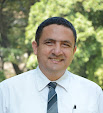
Not Dixit, Prinsloo or Carbonero, but the lady on my left is stunning! Photo by Saurabh Bose.


This note is not about the destination or the journey – there is much writing available on both (though little of it does justice to either, and, to be fair, it probably can’t – this area, after all, is the source of three important rivers, is sacred to four religions, is visually stunning and is, to put it mildly, difficult to reach – truly the roof of the world) – it is about what I learned in the process. Here is a short list of discoveries made during the summer of 2014.


One – I can still walk: The journey involved going up the Kumaon Himalayas on the Indian side, crossing the 17,000 plus foot Lipu Lekh Pass into Tibet, coming down the other side, and then doing the 50 odd km Kailash parikrama including crossing the almost 19,000 feet Drolma Pass. There was a hush in the group meeting at Dharchula, when we were counting the pony and porter requirement, when I said that I would use neither; I would walk, and would carry my own backpack (the government recommends, but doesn’t require, every pilgrim taking a pony and a porter). And so, I did! Needless to add, some younger blades in the group decided that if an old fart like me could do it, so could they. There were times when I regretted my madness (the first day of the return from China, for example, when we did 30 km across the Lipu to Goonji, and the 26 km we did on the day we crossed the Drolma La), but I have to say that my wife of almost 22 years was quietly impressed. The feeling was reciprocated – she too did most of the journey on foot.


A welcoming sight above Navidhang, 9 km from the top of the Lipu Lekh Pass into China! Photo by Navin Tank.


Two – China is awesome: I already knew that, after walking 6 days up the Himalayas on the Indian side, we would walk down just 3 km on the Chinese side and there would be a bus waiting for us – the Chinese have roads almost up to the border. I also knew that Taklakot (or Purang), the headquarters of one of China’s most remote counties within its most backward and remote province, would be a bustling town with fashionably dressed women all over the place, Go-Go Bars, Tea Houses and prostitutes. What nobody prepared me for was that the tap water in Taklakot would be of drinkable quality, that women would be doing everything men were doing, and that visiting a local eatery (the group hired kosher cooks to make Indian vegetarian food for the 9-day China-side of the visit, but my wife and I sneaked off for dinner in the evenings we were in Taklakot) would be such a good experience. We communicated in sign language and by pointing to what others were eating, in one place the cook came out of the kitchen when we walked in and welcomed us with a cigarette each, young girls would come up with their phones and ask to take selfies with my wife, and generally we were made to feel very welcome.

There was a level of efficiency and a quality of resources that would be unimaginable back home, as well as a smoothness of arrangements and an adherence to time (which, I am happy to say, was a quality shared by our group – to the surprise of our Chinese guides). And yet, there were refreshingly Indian elements to life – there were no such thing as fixed prices in the market, and bargaining was done using a calculator to write out a number and then passing it back and forth until an agreement was reached. And when we complained about the behaviour of the porters and pony handlers during the Kailash parikrama, the authorities just threw up their hands and said that they had been trying for years to get them to behave properly, but it was impossible and there was nothing that they could do.


Mount Kailash, as seen in the evening from Deraphuk. Photo by Rinky Chaudhuri


Someone observed that ‘thank God Kailash and Mansarovar are in China – had they been in India they would have become the miserable shit-holes overflowing with greed and dirt that our shrines have become’. I think there was near consensus within the group on this.


Three – there is much to appreciate about Hinduism: As a hardcore atheist, I was deeply uncomfortable about having to spend 24 days (I include the days spent in Delhi on MEA briefings and medical examinations) closeted with pilgrim-types. My experience on earlier visits into hills was that, in addition to being bigoted, pilgrims were dirty, selfish, and environmentally irresponsible, and avoidance was the best strategy. All those I spoke with who had done the journey previously said that the pilgrims on this one were no different, but that every group has a few non-believers who are there for the adventure, and advised that it is best to find one’s own kind and stick to them.

This advice could not be followed because it was soon obvious that my wife and I were the only apostates around. And thank God for that! I got to know everyone, and discovered a great bunch (and one of the things about a long trek is that you cannot hide your true personality) that I am proud to know.


Baba Ajitnath at Lake Mansarovar. Photo by Sanjay Manocha


From the beginning, I never felt excluded! Nobody looked at me questioningly when I didn’t know the words to bhajans, or to the Hanuman Chalisa, or didn’t know what an aarti was, or even when I sat out of the group’s havan on the banks of Mansarovar (I was called in time to eat the prasad) and bunked a visit to a temple in Taklakot so that I could watch a replay of a football game (a friend even joined me for that). Only one person asked me why I was on the trip given my obvious lack of religious belief and another, our group’s glamour doll, once expressed surprise at the contrast between my knowledge of religious matters and my knowledge of everything else (ahem!). By the end of the trip, the words ‘Om Namoh Shivaye’ were rolling easily off my tongue, and I was enthusiastically singing bhajans and whatnot. My wife is now worried that we will begin doing pooja at home.

I (and the others) like to think that there was something special about our group. For me, we were a wonderful advertisement for Hinduism – not too judgemental, reasonably respectful of each other, of other cultures, and of women, and interested in having fun and enjoying ourselves. I felt the inclusiveness of my religion here. There were Hindutva elements in the group, but they didn’t make it obvious, and there were public menaces as well, who woke up at 0200 hours to chant and pray, and who rushed to be first for food, but we soon saw the funny side of this behaviour. We also had our arguments and disagreements, but we all became good friends. Today, 3 weeks after our return, we are missing each other terribly.


Four – the more things change, the more they remain the same: Next to Lake Mansarovar was the equally beautiful Lake Rakshastal, where Ravan had done his penance to Shiva. Why did he need a separate lake? Because he was an asura, and the devas refused to share Mansarovar’s water with him. Does the discrimination sound familiar? Advocates of the perfection of those times, who are trying to re-introduce Ram-rajya, need to have a think.


Five – I learnt something about leadership: A journey such as this – large groups of not particularly young or fit people going across some of the toughest terrain in the world, at high altitudes and in inclement weather – is not easy to manage. It involves coordination between multiple agencies; the Ministry of External Affairs, who are the main organizers, the Kumaon Mandal Vikas Nigam, the Indo-Tibetan Border Police, the Government of Uttarakhand and, on the China side, the Tibetan Tourism Authority. And yet, for the pilgrims, there were few sources of tension – we were fed regularly, we slept under a roof every night, and we pottied in closed and reasonably clean spaces that had access to water (except for Deraphuk and Zimchulphuk in China). Coordination f-ups did not, for the most part, permeate down to us.


Contemplating the meaning of life on the banks of the Mansarovar! Photo by Rinky Chaudhuri


This is because the Ministry appoints a person to lead each group, coordinate with the respective agencies, take the tensions and stresses, and get the pilgrims there and back safely – usually a mid-level government officer, who is referred to as a liaison officer (or LO). And we were lucky in our LO – we got a gem of a guy who actually loved trekking (he was one of the select few in the group who’s butts never felt the back of a horse for the entire journey) and being with people, and who had none of the airs of babudom. He didn’t have an easy time of it, there were shortages of ponies and porters for most of the journey, people’s luggage got misplaced, and pilgrims in general tend to be considerably more rights-conscious than the average Indian citizenry, but he handled us brilliantly; with calm, patience, minimum authority and maximum effect. I was particularly touched when I arrived late in the evening at Budhi, dead-tired after a long day walking with some ladies who were having difficulty (the LO had given me the job of being at the tail of the group on a day that we had no ponies), and he was waiting at the entry to the camp to personally thank me. We subsequently got to know that we were the only batch in the history of the Kailash Mansarovar Yatra to have made it up to Goonji without ponies. That all 48 of us made it across and back in the circumstances that we did was in no small way due to his leadership.


Six – I can miss the World Cup and still live: I have watched the World Cup since it first came live on Indian TV, from the 1982 semi-final between Poland and Italy (2-0 to Italy, Rossi scored both). As a practice, I switch off once in four years and devote myself entirely to the game, and my friends and family know that this is not a time to die, fall sick, get married, have babies, or do anything that requires attention or effort from me. So, when the places for the journey were allotted and our dates fell entirely during the World Cup, my wife was sure that she would be doing it without me (‘I know you’ll dump me at the last moment, you b#@%y b#@?%d,’ were her exact words). Given the prospect of our 21-year-old marriage not reaching 22, I made a choice.

I know that I missed a great World Cup. I missed Algeria, Costa Rica and Columbia doing so well, England and Italy doing the opposite, Brazil getting -- (is there a word in English for what happened to them?), and a European team finally winning in South America. But, hey, as the old Kris Kristofferson number goes, ‘life goes on, and this old world keeps on turning’.


To conclude: A dip in Lake Mansarovar is supposed to rid a person of hatred, jealousy, greed, delusion and idleness, according to the legends (the absence of ‘lust’ and ‘anger’ on this list raises eyebrows). I don’t know if it applies to skeptics like me, and it certainly hasn’t thus far, at least on the ‘idleness’ front. But, according to an old friend who had done the journey some years ago, these 24 days will have strange effects in the long term – effects that are not obvious early, but effects that will change one’s life. I will wait and see and, if and when they happen, I will take them as they come.

Thursday, February 13, 2014

Postcards From The Edge


POSTCARDS FROM THE EDGE

Ajit Chaudhuri – February 2014

‘That which does not kill us makes us stronger’ - Friedrich Nietzsche


I’ve travelled a bit in my fifty plus years, and done a few dumb things in the process. I place the blame for these on a line of thinking that I have consistently adhered to that goes ‘the nice thing about advice, no matter how credible, good or sensible it is, is that I don’t have to take it’. If I’d known what I know now, would I have done those things? I don’t know! Mad plans (or no plans), after all, give space for serendipity to work its magic. And yet, when I look at the following list of travel experiences that I would not advise anyone to repeat, I cannot help but think, ‘Good God, was I really that stupid?’

Going Topless on Taglang La: I was trekking from Leh to Spiti in August 1995 and decided to use the opportunity while crossing the Taglang La pass to pose for a photograph next to the signboard (the photo is attached below).


The temperature at the time was -11c, and yes, the white in the background is snow. I was cold from deep within for the next two days, and miserable too, but the stunt was well worth it – it has set the gold standard for machismo or stupidity (depending upon gender) among family and friends. When my grandchildren see me doddering around with a walking stick and make fun, they will be shown this and told, ‘do something similar, and then talk’.


Crossing the Arctic Circle in Winter: As a mid-career student in London in late November 2001 (on a generous scholarship, may I add, and with wife and children far away), I had a long weekend coming up and one of the things I hadn’t yet done in life was see the aurora borealis. Where could one do this? The chances were higher the further north one was, I was told, so I booked a ticket from London to Oslo and then onwards north to Tromso at 70 degrees latitude, and duly spent the weekend there. The damn lights refused to oblige, however, and I returned without seeing them, but I had a pretty good time supporting the local alcohol and nightclub industries – the appended link has a detailed account of my adventures there. The surprising thing was that, despite the heavy snow, it wasn’t too cold (the Barents Sea has a warm water current) and it also wasn’t too weird having no sun and seeing, instead, the effects of moonlight on snow through the day. Beautiful! But never again!


Visit to Ukhrul: Manipur in early 1997 was a mess! The Nagas were fighting the Kukis, the Meiteis were fighting the hill tribes, the drug dealers were fighting the Church and everyone was fighting the Army, and I was in the state with a colleague, Dr. Sunil Kaul, to appraise an NGO for possible financial support. We could have done it sitting in the state capital, Imphal, but decided, what the hell, let’s go and see the NGO where it worked, in the hills in Ukhrul. Not an easy decision, may I add, because the organization leading the Naga insurgency (the NSCN-IM, for the pundits among you) was founded and headquartered there, and because the foothills, which we would have had to pass through, were under the control of Kuki militant groups.

The daylong journey from Imphal was tense, but we ended up in a place that would have made Kashmir seem ordinary – beautiful rolling hills lightly covered in mist, the smell of light rain on dry ground, and little log cabins with smoking chimneys intermittently spread across the hillside. The NGO had a training centre a little away from town, another log cabin, and we were put up there. Coincidentally, a group of 19 young ladies were being trained in the arts of beekeeping (or something) there at the time, and they were told that ‘two young men have come from Delhi – look after them!’ The quality of care that we got over the next day was unimaginable! To give you an idea, to wash hands before our evening meal, four young ladies came up to us; one with a kettle of hot water, one with a bowl for the used water to fall into, one with soap and one with a towel. Seven star hotels – you don’t compare!


Driving Holiday to Yamunotri: My family has been taking driving holidays together since 2001. They usually follow a pattern; a 6 to 18 day duration, an intended destination from which to begin the return journey but no plans on where to stop for nights or routes to take, and a promise upon returning to Delhi never to do it again because we are all sick of each other. In the process, we have made some interesting journeys, stayed in some excellent (and some terrible) hotels, eaten some unusual food and seen some exotic sights. But once, and only once, in 2005, did we leave the house with absolutely no destination in mind. We took NH1 towards Chandigarh, turned east somewhere towards Paonta Saheb, and then north again at Vikas Nagar, stopped for a night on the way, and finally ended up at a yatri niwas in Janki Chatti (which my kids renamed Janki’s Chaddi), where one begins the 6 km walk to Yamunotri. The next day, we did the walk up and down, with my kids aged 5 and 8 being bribed with the promise of a prize if they made it without a horse, which they duly did. We made quite a contrast to the yatris on the trail.


Fieldwork in Panjab and Waras: Being entrusted with the task of evaluating a training centre in Bamiyan (Afghanistan, summer of 2009) did not require me to visit the centre’s extension outposts in the province’s remote districts, but I asked to do so anyway. ‘If I am required to attest to their existence,’ I told my rather incredulous hosts, who were more used to the opposite sort of requests from consultants, ‘I will have to see them.’ Thus began a journey in a muscular 4-wheel-drive through some of the toughest terrain in the world, the central highland region of Afghanistan, from Bamiyan via Yakawlang to the districts of Panjab and Waras. The highlight of the visit was a stopover on the way back at Bandh-e-Amir, a series of seven large, naturally formed, stepped, blue water lakes, one of the remotest and most beautiful wonders of nature, where I even managed to get a boat out into the waters. I am informed that the journey is off limits now because of some recent kidnappings indicating Taliban activity in the region, and I am damned glad that I did it when I could.


Conclusions: If the tone of this paper indicates that mad travel-related stuff is relegated to the past let me assure you that such is, hopefully, not the case. To conclude, I list out five acts that, inshallah, I will do some day in the future.


1.    Trek around Mt. Nanda Devi – this involves going north in Kumaon, crossing Milam and then hitting the 5,000 meter plus passes Unta Dhura, Khingri Bingri and Jandi Dhura, going around the Nanda Devi and getting back via Garhwal. Some day when my trekking friends and I have sufficient contact in the Home Ministry to get the necessary permissions …


2.    Watch a Millwall match at The Den – this is one of the roughest and most passionate football crowds in the UK, who mix their passion for football and love for their club with racism, anti-immigration, and right wing politics. Not a place for the faint-hearted, but I look forward to my friend Tony (who ashamedly admitted to being a Millwall fan) taking me there some day.


3.    Travel up the Wakhan Corridor – I have been several times to the province of Badakhshan in Afghanistan, and one day want to see its most remote district, Pamir, and to travel along the buffer zone between the British and Russian empires, in the narrow sliver of land between the Tian Shan, Hindukush and Karakorum mountain ranges. This is the Wakhan Corridor.


4.    Take an Alaskan Cruise – get on to a ship in Seattle, and take a journey northwards along the western American coastline across the Puget Sound, then British Columbia (Canada) and then Alaska, through the many little islands in this part of the Pacific, and preferably with my larger family.


5.    Visit the battle sites of the Mongol Army’s western campaigns of the 13th century – these are spread across modern day Poland, Hungary, Ukraine and Russia, in places like Legnica, Kalka River, Ryazan, Suzdal and Mohi.

Friday, August 9, 2013

A JOURNEY TO KASMU


A SENTIMENTAL JOURNEY TO KASMU

By Ajit Chaudhuri – August 2013


Introduction: This note is about a visit to Kasmu, Estonia, on 27th April 2013.

I will begin with events in the early 1930s, when a young lady in a coastal village in the country of Estonia was the object of attraction for the village adventurer. Her parents, obviously not enamoured of the prospects of this relationship, decided to circumvent things by sending her to London to learn English. The law of unintended consequences duly applied, she met an Indian medical student while in London, and they fell in love and subsequently married in 1935. They returned to India in 1938, the young medical student (by then a doctor) joined the Indian Army Medical Corps and rose to become a General, and they had four children – the youngest of whom is my mother. They retired in the town of Dehradun, and he died in 1985, a little after their 50th wedding anniversary. She lived on till 1996, never visiting her village or her country (which in 1940 became part of the Soviet Union) again.

I was close to my maternal grandparents and spent a lot of time with them (and later with my grandmother). They were typical grandparents, I suppose – I was always sure of my welcome, and there was always something good to eat in the house. My grandfather was a typical military patriarch, and the only thing distinguishing my grandmother from a fairly typical Bengali housewife was her light hair and blue eyes. The eldest of my sisters, who was also close to them, said that she also had a certain northern coldness – my grandfather was always delighted at my unannounced visits, but like all Bengali men did nothing in the house; my grandmother was never so overtly happy at them, but did all the work, the additional cooking, cleaning and bed making, that made me comfortable. It was only when she took out her photo albums and showed us pictures from her childhood that we actually saw her animated.

She loved showing these old black and white photos of her family and friends, and talking about her childhood in the village Kasmu, her school and the various cultural performances she took part in, and the times spent playing on the rocks along the shores of the Baltic Sea with her friends Sigrid and Jus. She talked about the Sea School in Kasmu, where her father and most men in her family had trained to become ship captains. She talked about her visits to Tallinn, the country’s capital city, usually done in an overnight sleigh ride, with all the wonderment of a village child seeing the big city lights. She also saved up, to my grandfather’s amusement, a Reader’s Digest article about Ahto Walter, her adventurer admirer, who went on to set records in Atlantic crossings. Estonia, in her descriptions, was a land of milk and honey.

The entrance to the Sea School (now Museum) at Kasmu 

But there was sadness in her tone as well. She could never go back – the independent Estonia she had grown up in did not exist – it was a corner outpost of the Soviet Empire. Her mother, father (who died early) and stepfather were all dead. Those of her relatives who could not escape to Finland or Sweden (both countries across the Baltic from Kasmu) and become refugees in foreign lands were systematically rounded up and shipped off to Siberia, where they died. There was nothing to go back to!

My maternal grandparents (large photo), the brothers Jakob and Alexander Kaskni (right) and Nadezhda

We, the elder grandchildren, did not think too much of it – Estonia was always some faraway place that our grandmother talked about, and nothing more. It was only when we saw her happiness at Estonia regaining independence in 1991 – we were delighted that it happened in her lifetime – that we realized that there was a side to her that we did not know at all. It was after her death that I decided that the journey to Kasmu was one pilgrimage I had to make.

The author in Tallinn
Visiting Estonia became a real possibility once it became a part of the Schengen Agreement (this enables visa-free travel within member states), and I used the opportunity provided by a visa to visit Germany (and present a paper at an academic conference at Heidelberg University) to take a few days out for this. I tried to take my mother along (she has never been), but she demurred – she did the next best thing, however, and financed my trip (thanks Mum). I am not the first in the family to have been – my wife, two sisters, a niece and two nephews have preceded me there over the years. I arrived in Tallinn and spent a day acclimatizing to the late northern winter before making a day trip to Kasmu to see the house where she grew up in and the shores in which she played as a little girl, and to say a short prayer at her family graveyard (where her father, mother and relatives are buried) in the village. I was assisted in this endeavour by my cousins by marriage, Helve and Arvo Saat from Tallinn, who drove me there, took me around, translated for me, and then treated me to a damn good lunch before bringing me back to Tallinn. Many thanks to them! All photos are by Arvo, and, for the curious among you on these matters, the glamorous lady by my side in some of them is Helve.

Helve and I at the door of the Sea School


Kasmu Itself: The journey to Kasmu is a beautiful and pleasant one – northeast along the highway to St. Petersburg, and then a turn westward just before Rakvere to the Baltic coast – traversing temperate forests and the Lahemaa National Park area before hitting the coastline and the two adjacent villages of Vosu and Kasmu. Visiting the region was forbidden during Soviet rule for its proximity to Finland. In April, it was a sleepy little village with no restaurant, but I am told that things liven up in the summer months, when it becomes a tourist hotspot and also the venue of an annual music festival.


The Sea School: It is here that I met my cousin Arne Viik, who runs the Kasmu Museum that was the Sea School in my grandmother’s times. Her father, Alexander Kaskni, was both a graduate of the school and later its principal, and it is here that she was born. During the Soviet years, the building was taken over by the Soviet border guards and used as a barrack.

Cousin Arne showing me photos of our common ancestors
The museum itself is a fascinating place that records Kasmu’s relationship with the sea with dedication and commitment. Cousin Arne was in the process of writing a history of the Sea School and a record of the many sea captains who had studied here, and he mentioned that one of the few of whom he had no photos was Justin Lyschak or my grandmother’s cousin and childhood playmate Jus. I was delighted to arrange for a photo, available with my Aunt Niila in England, so that Uncle Jus was appropriately recorded in the book.

Captain Justin Lyschak or Uncle Jus, who lived a life less ordinary

I also discovered that my grandfather had visited here with my grandmother in the 1930s, and had introduced himself to his family-by-marriage. He was the first dark skinned person to visit the village, and there was much curiosity about him at the time. Great-grandmother Nadezhda had already died by then, but she was famously quoted as saying "If I knew that Ira (my grandmother), who I sent to England to get away from the rascal Ahto Walter, would fall in love with an Indian, I would have let her marry Ahto!" before doing so.

My grandparents, photographed when they visited Kasmu in the mid-1930s

My grandmother had kept in touch with her friends, most of whom had settled in the USA, Canada and Sweden, over the years, and had shared photographs that eventually found their way into the Kasmu museum. It was especially touching to see photos of my own childhood, photos that I had thought were long lost , stored carefully here.

Looking out at the sea on one of the rocks I knew so well

From the Sea School, looking out into the Kasmu Harbour was a weird experience – I knew all the rocks from my grandmother’s photos and vivid descriptions, and I could almost see a young girl and her two friends jumping around on them. I went around the beach, climbed some of the rocks, and even wiggled my toes in the freezing Baltic waters.

A view of Kasmu Harbour from a window in the Sea School


The Kristenbrunn Residence: Alexander Kaskni died early, and his wife, my great-grandmother Nadezhda, subsequently married Eduard Kristenbrunn. My grandmother and her cousin Jus (Nadezhda’s sister and her husband both contracted TB early and gave Jus over to Nadezhda to bring up before they died) also moved to the Kristenbrunn residence. It is here that my grandparents stayed when they visited Estonia in the 1930s, which was to be my grandmother’s last visit to her watan. The residence is now a writers’ home, or a place that writers come to for prolonged periods of peace and quiet so that they can concentrate on their writing. When my sister, niece and nephews visited, cousin Aarne, who was taking them around, jokingly announced to the writers in residence that they would have to leave, the original owners of the building had come to reclaim the property. My wife, who travelled here with a friend while on an official visit to Sweden, even stayed the night here – she visited in mid-winter when nothing was open.

The Kristenbrunn residence
I was shown around by one of the writers in residence, who also asked me to write something in Hindi in the visitors’ book that they maintained.

Sitting at the table where my grandmother used to eat, with the writer in residence

The Family Graveyard: One of the things my grandmother had done, once it was possible to do (i.e. after the Russians had buggered off), was to have a proper gravestone put on her father’s and uncle’s graves. The graveyard is beside a Lutheran Church, reminding one of a time when Estonia was not the most non-religious country in the world (it is now). I did a round around the yard and spent some time reflecting by the graves of my ancestors.

A moment of reflection at Aleksander Kaskni's grave


The stone mentions Ira Kaskni-Roy on the right hand corner

Conclusions: The visit concluded with a wonderful lunch in the neighbouring village of Vosu, washed down with Estonian beer, and a drive on that beautiful road back to Tallinn. But I left wanting to do this again, with my children, and with the nephews who have yet to make the journey, so that they too recognize the part of themselves that is from this strange and faraway land, and so that they too are acquainted with that wonderful lady, my grandmother, and do not relegate her to just another name on a listing of ancestors. I hope that all her Indian descendants get to make this journey once in their lifetimes.

Monday, August 5, 2013

COMING TO AMERICA


COMING TO AMERICA
By Ajit Chaudhuri, July 2013


Introduction: I visited the US (for the first time) earlier this month, Afghanistan in May/June, and Germany (with a break in Estonia) in April/May – traversing four countries – the world’s most forward and backward nations, the economic powerhouse of western Europe, and a corner of the erstwhile Soviet Union – in a period of four months. If I may say so myself – WOW!

Few dispute that Afghanistan is the worst country to be born in today, and those questioning the US’s no. 1 status too would be on sticky ground; it is a huge country – the world’s third largest in area and population, and by far its richest – it is the sole global superpower, it combines natural resources with first world infrastructure and innovation with high quality governance, and it is unsurpassable in software, entertainment and high speed pizza delivery. The differences between the world’s two no. 1s (i.e. those at either end of the spectrum) would fill an encyclopaedia, but are pretty much obvious. It is the rather fewer similarities that interested me, especially so because these also contrast them sharply from the other two countries I visited. On the soft side, the first similarity was that religiosity is high, the second that family is important and the safety nets it provides critical for an individual’s progress, and the third was the love for guns within the populace. Respect for hard work and a lack of shame in undertaking menial occupations were discernable in both. And, on the tangible side, the complete absence of any form of public transport (except the most rudimentary kind) was common to both countries.

But this note is not to compare, it is to reflect upon the many things I learnt and to convey my wonderment at what I did, saw and heard upon my visit to the US. For me, the visit served to convert a familiarity gained from newspapers, novels (especially Steinbeck, Chase and L’Amour) and films to one gained from first hand experience. Let me begin by saying that this is the only longish (3 weeks Delhi to Delhi) trip that I have ever made that has had only highs – there were no low points, no difficulties or unpleasantness’s of any sort, no trying circumstances, from the time I left my doorstep in Delhi to the time I returned. For this, I owe a huge thanks to my father and brother, who joined me for the trip, and to my aunt and cousin in Seattle, all of whom did everything they could to make my experience memorable (yeah, I know, this sounds like an Oscar acceptance speech, but is no less true for it).


Getting to the US: The difference, for the visitor, between the US and other developed countries begins well before the visit, with the visa process – high tech, streamlined, efficient, and ending (for me) with a long-yerm visa. This compares favourably with the UK (where the visa process is a profit centre and charges are huge) and Western Europe (where every visit requires a visa, and one has to make false hotel bookings and lie about itineraries). I must confess to having been worried, expecting my six visits to Afghanistan since 2009 to set off red flags, but nobody in the visa process, or even later (for example, homeland security while entering the US) was in the slightest bit interested. And a bit cheesed - all that time and money spent photocopying my Afghanistan contracts and preparing explanations gone to waste!

I went to Seattle on Emirates Airlines – this involved a 14-hour flight from Dubai to Seattle, the first time I have flown so long and among the longest commercial flights one can take. This was my first time on Emirates as well, and I was subject to another surprise here. My experience is that most journeys westward with a changeover in the Gulf area involve a jam-packed flight from India to the Gulf, usually in the company of beedi-smoking labourers, and a near empty flight from the Gulf onwards in which one can spread out. Here, it was the opposite! I got three seats to myself on Delhi-Dubai and a window seat next to the emergency door (and therefore nothing in front) with an empty middle seat on Dubai-Delhi. Dubai-Seattle was full, but I had the company of my father and brother and we were well looked after and plied with copious quantities of beer and wine while I watched educative films such as ‘Cockneys versus Zombies’ and ‘The Quartet’. Seattle-Dubai was done alone in a jam-packed but pleasant flight, and I managed to see ‘Silver Linings Playbook’ (not a patch on the book) and ‘Argo’ (quite good) and get some sleep. I also discovered that flights touching the US have an additional safety instruction – passengers are told not to congregate in the common spaces, such as outside the toilets – never heard that one before!


Driving in the US: I asked many regular visitors to the US a) whether I would need an international driving license to drive and b) how difficult was it to drive there, given that I was used to doing so in Delhi. I got differing advice on the first, and this was only cleared up once I checked the rules for Washington State (where I was visiting) on the Internet where it specified that, as a short-term visitor, my normal (Indian) driving license was valid. This was confirmed when I actually went to hire a car from Hertz and had to display my license to get the car and insurance – there were no difficulties. On the second, everyone said it is easy to switch to driving on the other side of the road and to do things one doesn’t do in India like observe rules and lane discipline. This wasn’t quite the case! I did a fair amount of driving, including on larger inter-states (such as the I-5 connecting Mexico with Canada along the Pacific coast), smaller highways (such as the 101 that circumnavigates the Olympic Peninsula), inner city roads (in Seattle) and small town roads (going through Port Angeles and Aberdeen comes to mind here), and don’t remember a moment wherein I did not have to concentrate fully. It helped that the car we hired had a ‘Neverlost’, a GPS system with nearly idiot-proof instructions on directions, including options such as ‘no-tolls’ (avoid all routes involving toll taxes), ‘no-freeways’ (use smaller roads only) and ‘nearest-Burger-King’.


The author inside the Washington National Park near Anacortes

One would have noticed that car advertisements on TV always have the featured vehicle rolling along empty but perfect roads amidst idyllic scenery – far removed from the realities of driving. In the US, driving was quite close to these advertisements – great roads, not too much traffic, and beautiful scenery (Washington has ocean, coastline, mountains, islands, rivers, lakes, forests, and an abundance of spectacular sights). Good road manners was evident everywhere; people made space when a car enter their lanes, kept correct distances on the road and at traffic lights, and acknowledged and waved hands in apology for mistakes. The main difficulties I had were figuring out the correct speed to drive at (on average, traffic moved at 9 miles per hour above notified limits on highways, and limits were not overtly written in many urban areas), keeping to the centre of the lane (being used to a view of the road from the right of a car, I was unconsciously veering right), and getting used to overtaking and being overtaken on both sides (which is fine in the US but illegal on the wrong side anywhere else). On the whole, driving in the US was a pleasure, and I rediscovered my long-lost liking for it here.

Mt. St. Helen's, a volcanic mountain that last erupted in 1980

Public Behaviour: We had many minor interactions with strangers during the visit, and the high standards of public behaviour in the US stood out. Outside of the inner cities and the crowds, it was done to greet people warmly when you passed them and to speak to others softly, politely and correctly. This was in contrast to written impressions typifying Americans as loud and boorish, and to England, where politeness standards are high but it is somewhat fashionable to intersperse one’s conversations with pejoratives. Some say that this overt politeness is superficial and used mostly by people whose job requires it, such as waiters and shop assistants, but we found that it cut across and that it was often a pleasure to get into conversations with the people around us. The youngish couple seated next to our group on a sailing trip around the Puget Sound turned out to be West Pointers with tours of Iraq behind them, and the guy driving a Corvette in the Washington National Park was happy to take a photograph with me sitting in its driver’s seat so that I could show off to my wife back home. One also saw cleanliness in public places, without any signature warning against littering, and unobtrusive but high quality maintenance of public infrastructure. Were there beggars? A few – mostly white males, and mostly hanging out at traffic lights with signs making their case for alms (pathetic stuff like ‘Single Dad needs support to look after his two young children’). Indian beggars are far more evolved! I pondered over issues such as the honesty elasticity of begging incomes or, to put it minus the economic jargon, the extent to which honesty in these situations, and therefore signs like ‘addict needs money for his habit’ or ‘broke bum needs cash for booze and prostitutes’, would loosen purses.


Native American Reservations: We passed through and spent time in Native American reservations, and stayed two nights in the Quiluete Indian Reservation on the Olympic Peninsula. Some differences between Indian reservations and other areas stood out. The first was that it was obvious that Native Americans had problems with booze and drugs – the reservation areas had overt signs warning against the use of narcotics, the availability of booze in shops and restaurants was limited, and our instinct in the reservations was to be back in our hotel rooms before dark (which was at about 2200 hours, so it’s not that we missed much). The second was that some large businesses appeared to be community owned and run, with profits being plied back into the community, businesses such as the (excellent) resort we stayed in and restaurant we ate in on the Quiluete Reservation and the multitudes of casinos we saw that seemed to be a synonym for Indian Reservation, businesses that would have been in the private sector in other parts of the country (except casinos, which are allowed only on reservations in most parts of the US – a result of decentralization of law-making to local Native American councils). This left me wondering if there is something worth emulating in India in the not-particularly-successful UN-promoted programme to set up community-owned productive assets. And the third was that the proportion of slim women observable on the streets was low, even by American standards.

These two young Quiluete ladies, Kimberley and Samantha (middle), are mother and daughter. Samantha was our server at the River's Edge Restaurant at La Push. The author is about to tuck in to a Blueberry Pie & Ice Cream dessert.

Shopping: Conventional wisdom goes that one should not shop in a first world country – exchange rates make everything ridiculously expensive, and most things are available here in India anyway (gone are the days when one had to go abroad for nappy liners). The US turned out to be an exception – good quality clothes are cheap (and made in India, China and Bangladesh), especially if one visits the out-of-town outlet malls and warehouses, the choice is humungous, and the rights of customers are respected. Similarly with food, booze, cars and shoes. As somebody who abhors shopping, I must admit that our purchasing expeditions were pretty good fun. The main disappointment was in toys – the famed Toys R Us was downright boring.


Attitudes: It was obvious that Americans are very proud to be Americans; this showed in every conversation everywhere, and in the belief on their faces every time the Star Spangled Banner was sung. The American identity is expected to subsume all other identities in this essentially immigrant nation in what people refer to as a ‘melting pot’, in sharp contrast to ‘salad bowl’ Canada, also an immigrant nation where it is acceptable and even expected that one could retain other identities while staying together. This was most obvious in the difference between 4th of July (I celebrated at ‘The Gasworks’ in Seattle) and Canada Day celebrations (I was in Ottawa on the day in 2006). While joy, pride and a sense of occasion were common to both, most revellers in Ottawa draped themselves in two flags – the Maple Leaf, and the flag of their country of origin. In Seattle, there was only one flag visible.

Fourth of July at The Gasworks in Seattle


Most Americans are inward looking – to them, the world is a chaotic place that they want nothing to do with. Few travel out of the country, mostly to Mexico and Canada. And they share a distrust of anyone telling them what to do, such as government, and extreme distrust of foreigners telling them what to do (such as multilateral and global institutions). Even a remote corner such as the Olympic Peninsula had signs denouncing the UN (there is concern in the Quinault Reservation that a possible UNESCO heritage site will affect logging, hunting and fishing). And herein lies an interesting paradox – while no global institution can survive without the US on board, Americans themselves have no time for such institutions and see no reason to be subject to their laws and party to their agreements. There is a logic to this – it is undemocratic to ratify laws that have not been made or subjected to scrutiny by a nation’s own representative institutions, and therefore easier done by those who do not have such institutions (such as dictatorships) and those that do not take laws too seriously and have little intention of making the hard choices involved in implementing them (such as, I say with shame, India).


To Conclude: I did many things in what turned out to be a packed schedule, and have missed describing several that I would have liked to; my first Major League Soccer game (Seattle Sounders vs. DC United in a full stadium), and my visits to the University of Washington (what a library), Microsoft (what variety in their food court) and Boeing (watched a Dreamliner being born). The US made a great first impression on me, and I look forward to visiting again.